
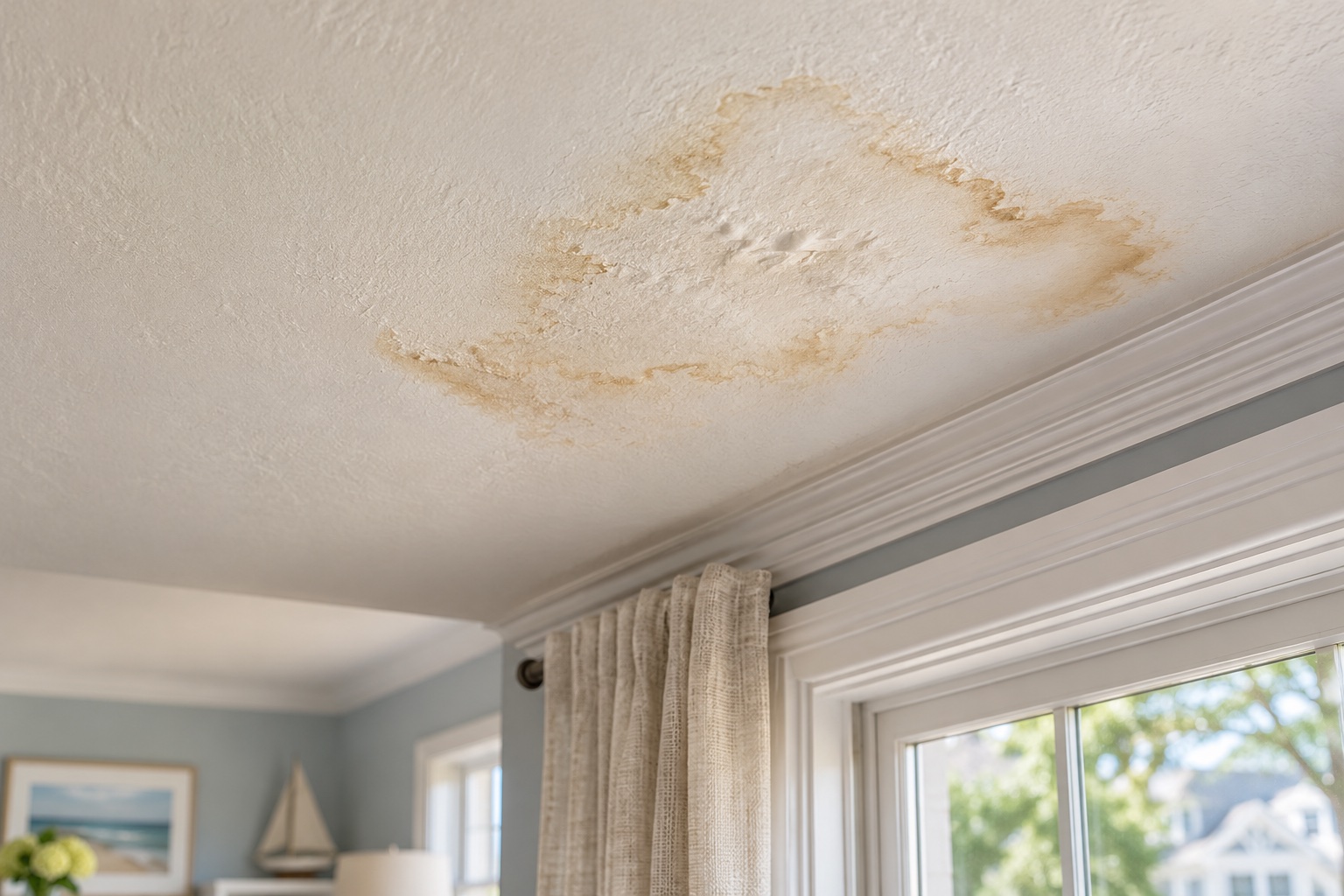
A brown ring on a ceiling, discoloration beneath a window, or a dark patch along a basement wall can raise questions when you are buying a home. Is it evidence of an old repair, or could moisture still be entering the property?
Water stains can have several causes, and their appearance alone rarely tells the whole story. For anyone purchasing a home in Manasquan, NJ, understanding these warning signs can help you ask better questions and recognize when further evaluation may be needed.
Ceiling Stains May Point to Roof or Plumbing Leaks
A ceiling stain often draws attention during a showing. Its location can provide clues about the source, but water can travel along framing and other materials before becoming visible.
Possible causes include:
- Roof leaks around damaged shingles, flashing, or roof penetrations
- Leaking supply or drain pipes
- Moisture from a bathroom above
- Condensation from cooling equipment or ductwork
- Overflowing HVAC condensate drains
A stain beneath an upstairs bathroom may suggest a plumbing issue, while one near a chimney could be associated with roof flashing. However, identifying the source may require additional investigation.
Even if the stained area feels dry, that does not establish that the underlying problem has been corrected. Some leaks occur only during heavy rain, wind-driven storms, or use of a particular fixture.
Stains Around Windows Can Indicate Moisture Entry
Discoloration below a window or along its trim may be associated with water entering around the window assembly. Possible contributing conditions include deteriorated sealant, flashing defects, or gaps in surrounding exterior materials.
Condensation is another possibility. When humid indoor air meets a cold surface, moisture can collect on glass and nearby materials. Over time, repeated wetting may damage paint, drywall, or wood trim.
In a Manasquan home, exposure to coastal weather makes the condition of windows and surrounding exterior surfaces worth a closer look. An inspection can help identify visible deterioration and conditions that warrant further evaluation.
Basement and Crawl Space Stains Deserve Attention
Water marks on foundation walls, stained lower wall finishes, or discolored crawl space framing may indicate past or recurring moisture.
Potential sources include:
- Rainwater collecting near the foundation
- Gutters or downspouts discharging too close to the house
- Ground sloping toward the building
- Plumbing leaks
- Groundwater seepage
- Condensation on cool surfaces
A white, powdery deposit on masonry, called efflorescence, can also indicate that moisture has moved through the material and left salts behind. It does not, by itself, establish whether water entry is active.
These findings should be considered alongside other visible conditions, including damp materials, peeling finishes, musty odors, and wood deterioration. A stain alone cannot establish whether a property has experienced flooding.
Bathroom Stains May Have More Than One Cause
Staining near a bathtub, shower, or toilet can result from leaking plumbing, failed seals, splashing, or repeated condensation.
The pattern and location matter. Discoloration on a ceiling above a shower may be associated with persistent humidity or inadequate ventilation. Staining on the ceiling below that bathroom may suggest leakage from fixtures, drains, or surrounding surfaces.
Fresh caulk or paint may improve appearance, but it does not confirm that a moisture problem has been resolved. Understanding the source is more useful than judging the finish alone.
Does a Water Stain Mean There Is Mold?
A water stain does not automatically mean mold is present. However, persistent moisture can create conditions that support mold growth.
Dark discoloration cannot reliably be identified as mold by appearance alone. Likewise, the absence of visible growth does not establish that concealed materials are unaffected.
If an inspection reveals moisture concerns, suspicious growth, or a persistent musty odor, further evaluation may be appropriate. Mold assessment or testing, when warranted, is a separate service from a standard visual home inspection.
How Can You Tell Whether a Stain Is Old or Active?
It is not always possible to determine a stain’s history during a single visit. An inspector may look for visible clues such as peeling paint, swollen trim, deteriorated drywall, dampness, and related conditions in accessible areas.
Moisture readings may help determine whether a material has elevated moisture at the time it is checked. However, a dry reading does not rule out an intermittent leak.
Useful questions to ask about a stained area include:
- When was the stain first noticed?
- Was the moisture source identified?
- What repairs were completed, and by whom?
- Are repair records or photographs available?
- Has the stain returned since the repair?
- Were damaged materials repaired or replaced?
Documentation can provide helpful context, especially when the affected area has been repainted.
What Can a Home Inspection Tell You?
A home inspection evaluates visible and accessible conditions at the time of the inspection. When water staining is present, the inspector can document the affected area, examine accessible nearby components, and explain whether further evaluation is recommended.
Depending on the location, that may include reviewing roofing, attic areas, plumbing fixtures, exterior drainage, windows, or foundation surfaces.
A standard inspection does not involve opening walls or ceilings, and weather conditions may limit what can be observed. The findings can still help you understand the concern and determine whether a roofer, plumber, or another qualified specialist should investigate further.
Schedule a Home Inspection in Manasquan, NJ
Water stains deserve an explanation. Some reflect a past leak that was properly repaired, while others may be a sign of an ongoing moisture problem.
Lighthouse Home Inspection provides professional home inspections in Manasquan, NJ, helping you better understand visible concerns and the overall condition of a property.
Before you move forward with a home purchase, schedule an inspection to take a closer look at water stains and other conditions that may need attention.