Why an InterNACHI Code of Ethics Matters When Hiring a Home Inspector
Hiring a home inspector is an important step when purchasing a home. A professional home inspection provides valuable information about a property’s condition, helping you better understand potential concerns before making a significant investment.
However, not all home inspectors follow the same professional standards. Beyond experience, training, and certifications, ethical conduct is an important consideration when choosing someone to evaluate a property.
The International Association of Certified Home Inspectors (InterNACHI) has established a Code of Ethics designed to promote honesty, professionalism, and integrity within the home inspection industry.
For anyone searching for a home inspector in Monmouth County, NJ, understanding these ethical standards can help when selecting a qualified inspection professional.
What Is the InterNACHI Code of Ethics?
The International Association of Certified Home Inspectors (InterNACHI) is a professional organization that provides education, certification programs, and professional resources for home inspectors.
Its Code of Ethics establishes expectations for how members should conduct themselves when providing inspection services.
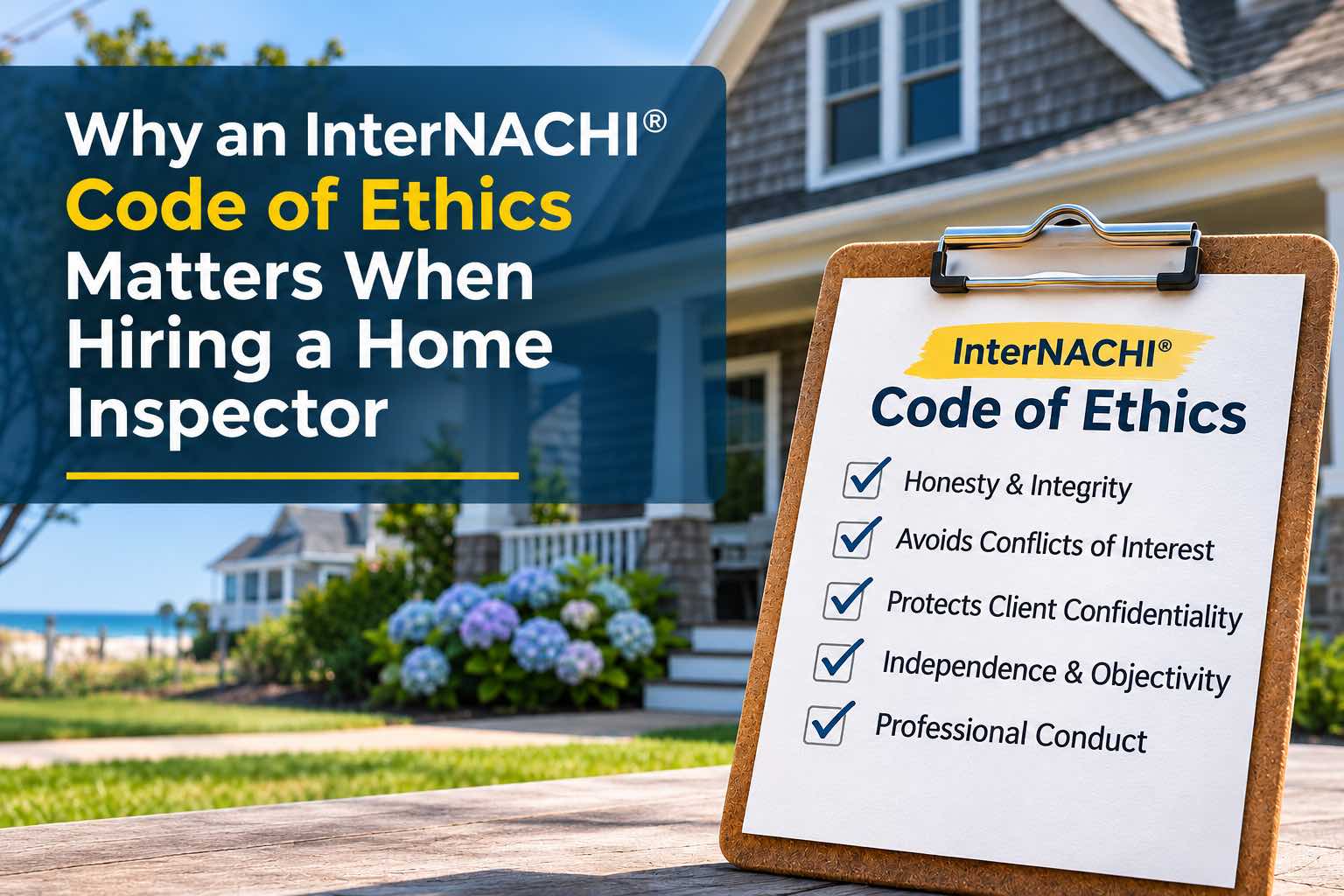
These standards address important professional responsibilities, including:
- Acting with honesty and integrity.
- Avoiding conflicts of interest that could compromise an inspection.
- Protecting confidential client information.
- Maintaining professional independence and objectivity.
- Avoiding practices that could undermine consumer trust.
The purpose of these standards is to help ensure that inspections are conducted in a professional manner, with the client’s interests remaining a priority.
Why Ethical Standards Matter During a Home Inspection
A home inspection is intended to provide an independent evaluation of a property’s visible and accessible systems and components.
Whether you’re purchasing an older home in Manasquan, a coastal property in Spring Lake, or a newer residence in Wall Township, you want an inspector who can provide an objective assessment without outside influences affecting the findings.
An inspector’s professional judgment should be based on the property’s condition rather than pressure from parties involved in the real estate transaction.
Following an established Code of Ethics helps reinforce the importance of independence, transparency, and professional responsibility.
Avoiding Conflicts of Interest
One of the most important aspects of the InterNACHI Code of Ethics involves avoiding conflicts of interest.
A home inspector should be focused on evaluating the property rather than benefiting financially from problems identified during the inspection.
For example, InterNACHI’s ethical standards restrict inspectors from performing certain repairs or related services on homes they have inspected within a specified period.
These restrictions help prevent situations in which an inspector might have a financial incentive to identify unnecessary repairs or exaggerate concerns.
For homebuyers, this separation between inspection and repair services provides an additional level of confidence in the inspection process.
Providing Honest and Objective Inspection Findings
A professional home inspection should identify observable conditions and communicate findings clearly.
An ethical home inspector should not intentionally minimize significant concerns to help a real estate transaction proceed. Likewise, an inspector should not exaggerate minor issues or make unsupported claims about a property’s condition.
Instead, the inspection report should provide a factual assessment of the inspected components, including documented deficiencies and recommendations for further evaluation when appropriate.
For example, homes throughout Monmouth County may present concerns involving:
- Roof wear, flashing, and drainage.
- Moisture intrusion in basements and crawl spaces.
- Aging electrical systems and components.
- Plumbing leaks and drainage issues.
- Heating and cooling system conditions.
- Exterior deterioration associated with coastal exposure.
- Structural movement or visible foundation concerns.
An objective inspection helps clients distinguish between routine maintenance items and conditions that may require additional attention.
Protecting Client Confidentiality
Home inspection reports often contain detailed information about a property’s condition, including photographs, deficiencies, and recommendations.
The InterNACHI Code of Ethics includes provisions addressing confidentiality and the handling of inspection findings.
Inspectors are expected to respect their clients’ information and follow applicable requirements regarding disclosure.
This is particularly important during real estate transactions, when multiple parties may be interested in obtaining the inspection results.
A professional inspector should understand the importance of protecting client information and communicating findings appropriately.
Ethical Conduct Is Especially Important for Shore Homes
Homes along the Jersey Shore can present inspection considerations that differ from properties farther inland.
In communities such as Belmar, Sea Girt, Bradley Beach, Spring Lake, and Manasquan, properties may experience environmental conditions associated with salt air, humidity, wind-driven rain, and coastal storms.
These conditions can contribute to deterioration of exterior materials, corrosion of exposed metal components, moisture intrusion, and other maintenance concerns.
When evaluating a shore property, an inspector should communicate observable conditions accurately without overstating or minimizing their significance.
Following professional ethical standards supports the objective reporting that homebuyers need when evaluating properties in coastal communities.
Does InterNACHI Membership Guarantee a Quality Home Inspection?
InterNACHI membership and adherence to its Code of Ethics are positive considerations, but they should not be the only factors when selecting a home inspector.
Homebuyers should also consider an inspector’s experience, qualifications, inspection process, and familiarity with local housing conditions.
In New Jersey, home inspectors must also comply with applicable state licensing requirements and professional standards.
When researching home inspection companies in Monmouth County, consider asking about:
- New Jersey home inspector licensing.
- Professional certifications and continuing education.
- Experience inspecting homes similar to the property you’re purchasing.
- The scope of the inspection and what is included.
- The type of inspection report provided.
- Additional services such as radon testing, termite inspections, mold testing, and pool inspections.
Combining professional qualifications with ethical standards can help you make a more informed hiring decision.
Choosing a Home Inspector in Monmouth County, NJ
Whether you’re purchasing a home in Freehold, Wall Township, Manasquan, Spring Lake, or another Monmouth County community, selecting the right home inspector involves more than comparing prices.
You want someone who approaches the inspection professionally, communicates clearly, and provides an independent assessment of the property’s condition.
Understanding the InterNACHI Code of Ethics is one way to evaluate a home inspector’s commitment to professional conduct.
Schedule a Professional Home Inspection with Lighthouse Home Inspection
Lighthouse Home Inspection provides professional home inspection services throughout Monmouth County, NJ, including Manasquan, Spring Lake, Sea Girt, Belmar, Wall Township, and surrounding communities.
Our inspections are designed to help clients better understand the visible and accessible conditions of a property, identify potential concerns, and make informed decisions.
If you’re looking for a home inspector in Monmouth County, NJ, contact Lighthouse Home Inspection to learn more about our services or schedule an inspection.