
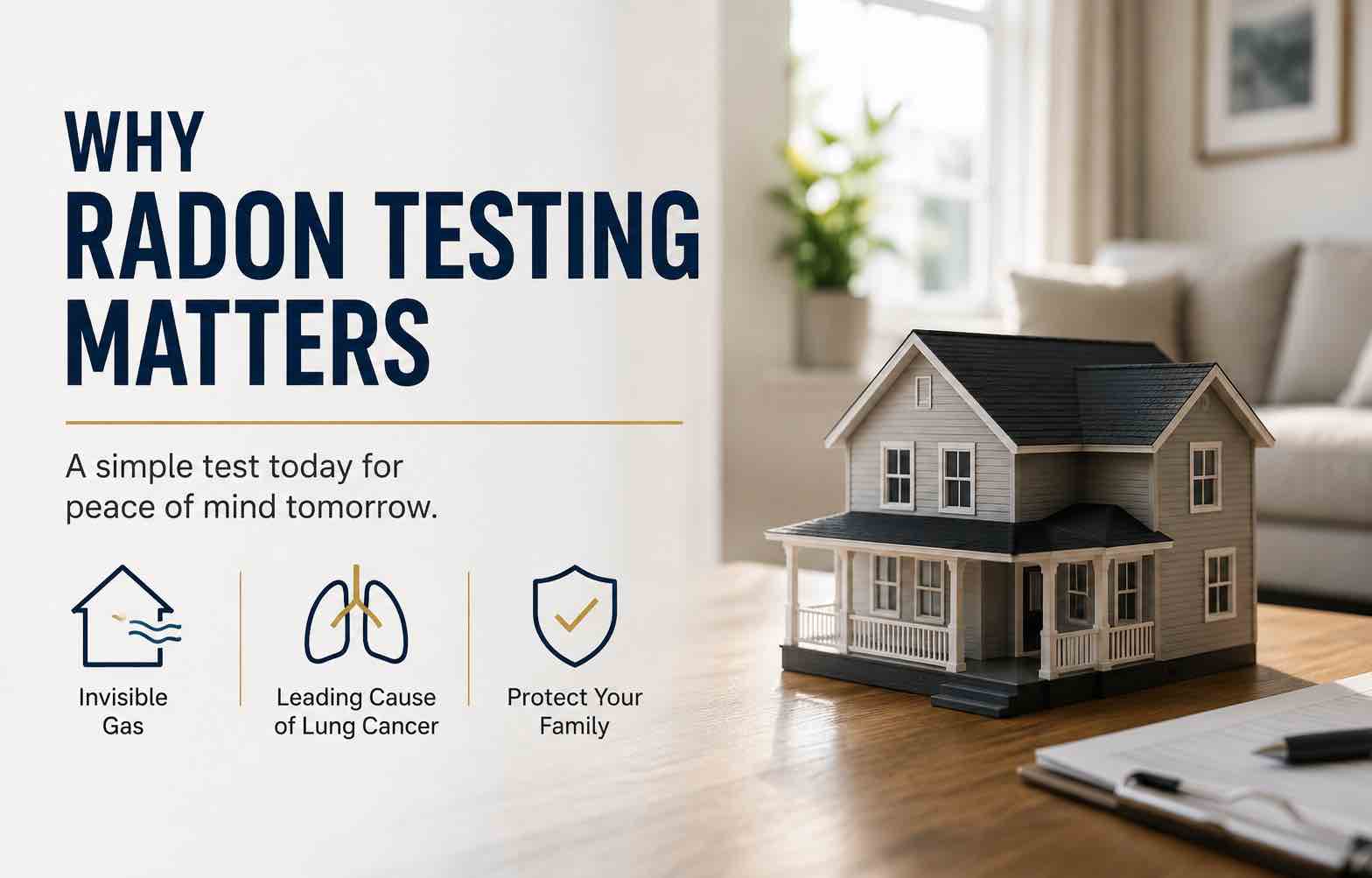
When buying a home in New Jersey, there are many things to consider beyond what you can see during a showing. The condition of the roof, electrical system, plumbing, foundation, and HVAC equipment can all be evaluated during a professional home inspection. However, some potential concerns cannot be identified through a visual inspection alone.
Radon is one of them.
Radon testing can provide important information about a home’s indoor environment before you complete your purchase. Because radon is invisible and odorless, testing is the only practical way to determine whether elevated levels are present in a particular home.
What Is Radon?
Radon is a naturally occurring radioactive gas that comes from the breakdown of uranium in soil, rock, and groundwater. It can enter a home through openings where the structure comes into contact with the ground.
Potential entry points can include foundation cracks, gaps around pipes, sump areas, crawl spaces, construction joints, and other openings.
Once inside, radon can accumulate, particularly in lower areas of a home.
Why Is Radon a Concern for New Jersey Home Buyers?
Radon is not limited to homes in one particular part of New Jersey. Levels can vary significantly from one property to another, including neighboring homes.
According to the New Jersey Department of Environmental Protection, all homes should be tested for radon regardless of the municipality’s radon potential classification.
For buyers, this means you should not assume a property has low radon simply because of its location or because neighboring homes have previously tested at acceptable levels.
You Cannot Detect Radon During a Home Inspection
A home inspector can identify many visible conditions throughout a property, but radon cannot be seen, smelled, or tasted.
A home may appear well maintained and have no obvious indications that elevated radon levels are present.
This is why a separate radon test can be an important addition to the home inspection process.
How Does Radon Enter a Home?
Differences in air pressure can draw soil gases into a building through openings in and around the foundation.
Radon may enter through:
- Cracks in concrete floors and foundation walls
- Gaps around utility penetrations
- Floor and wall joints
- Sump pits
- Crawl spaces
- Gaps around plumbing
- Other openings in the foundation
Both older and newer homes can potentially have elevated radon levels. The age, appearance, or condition of a property does not provide a reliable indication of its radon level.
What Happens During a Radon Test?
Radon testing involves placing approved testing equipment in an appropriate location within the home and allowing it to collect measurements under specified conditions.
It is important that the testing procedure is followed correctly so the results provide useful information about the property’s radon level.
Your inspector can explain how the test will be performed, where the testing equipment will be located, and what conditions should be maintained during the testing period.
What Is Considered a High Radon Level?
Radon levels are measured in picocuries per liter of air, commonly abbreviated as pCi/L.
The U.S. Environmental Protection Agency recommends taking action to reduce radon when the level is 4 pCi/L or higher. The EPA also notes that homeowners may want to consider mitigation when levels are between 2 and 4 pCi/L.
If a test identifies an elevated radon level, it does not necessarily mean you should walk away from the home.
Radon problems can often be addressed through a properly designed mitigation system.
What Is a Radon Mitigation System?
A radon mitigation system is designed to reduce the amount of radon entering or accumulating inside a home.
A common approach uses a pipe and fan system to draw radon containing soil gas from beneath the home and safely vent it outside before it enters the living space.
The appropriate mitigation approach depends on the design and construction of the property. If elevated levels are found, a qualified radon mitigation professional can evaluate the home and recommend an appropriate solution.
What If the Home Already Has a Radon Mitigation System?
The presence of an existing mitigation system does not eliminate the value of testing.
A buyer may want to confirm that the system is operating and that current radon levels are within an acceptable range. Like other components of a home, radon mitigation systems may require monitoring and maintenance over time.
Testing provides current information rather than relying solely on previous results.
Should New Construction Homes Be Tested for Radon?
Yes. Newer construction does not guarantee low radon levels.
Even if a home includes radon resistant construction features, testing can help determine the actual radon concentration inside the finished home.
Radon comes primarily from the ground beneath the property, which means it can potentially affect homes of different ages, sizes, and construction styles.
Why Testing Before Buying Is Valuable
A real estate transaction gives buyers an opportunity to gather information about a property before completing the purchase.
Adding radon testing to your home inspection can help you determine whether elevated levels are present and whether further evaluation or mitigation should be considered.
Finding elevated radon does not automatically make a home a poor purchase. The important thing is knowing about the condition so you can make an informed decision.
Schedule a Home Inspection and Radon Test in New Jersey
A home can look great during a showing while still having conditions that are impossible to identify without proper testing. Radon is a good example of why a comprehensive approach to evaluating a property is important.
Lighthouse Home Inspection provides professional home inspection services for buyers throughout Monmouth County and surrounding areas in New Jersey. When scheduling your home inspection, ask about adding radon testing so you can have a better understanding of the home before moving forward with your purchase.